E : aitech@pmfst.com
Research on Vibe Coding in Teacher Education Presented at EDULEARN26
June 9, 2026
AITECH Workshop with Children from Marjan Kindergarten: Discovering AI through Play, Robots, and Unplugged Activities
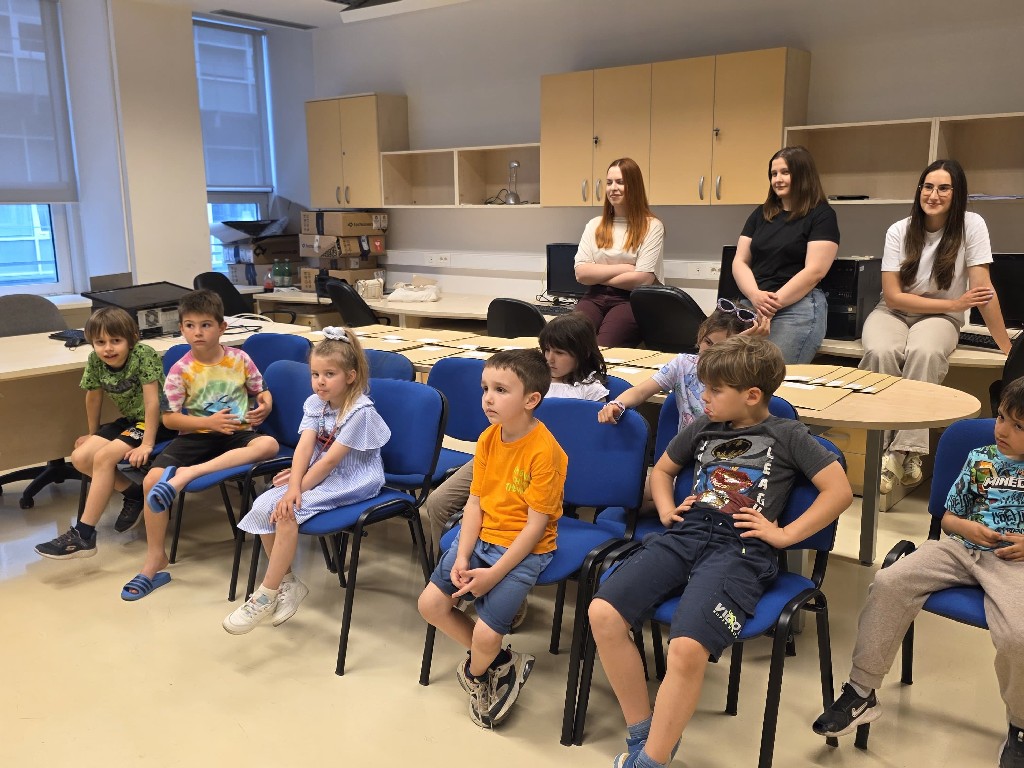
On Wednesday, 27 May 2026, the Department of Informatics once again welcomed our dear guests from Marjan Kindergarten, accompanied by Klara Petrić and Ana Lazarević, leaders of playgroups for potentially gifted children.
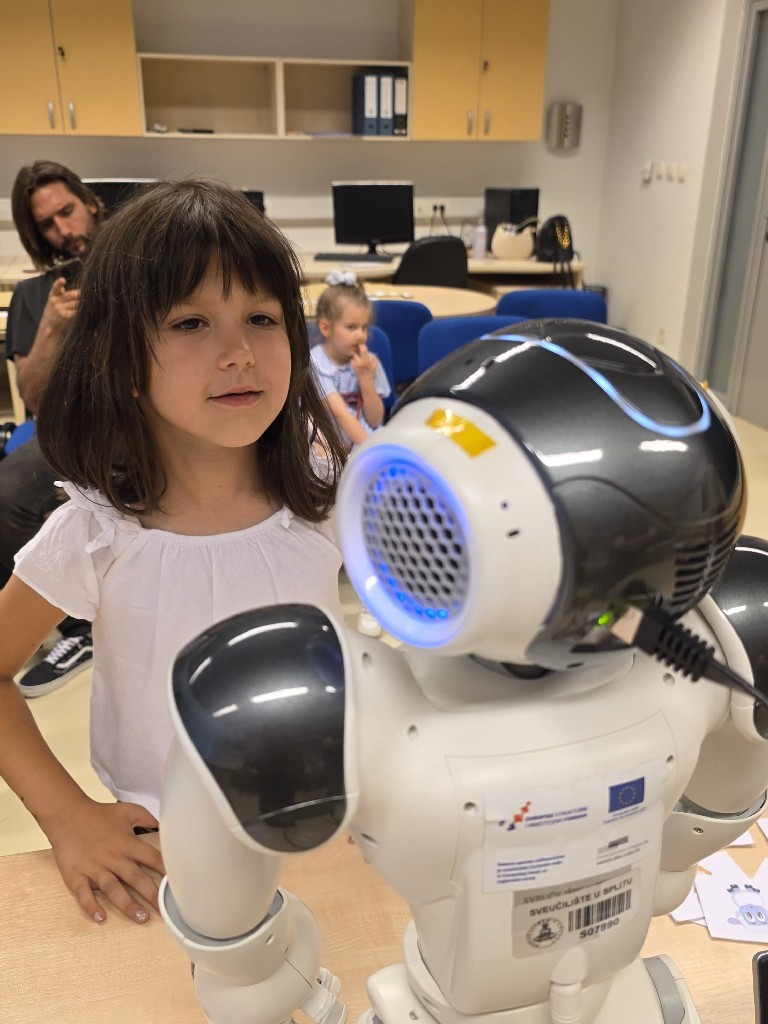
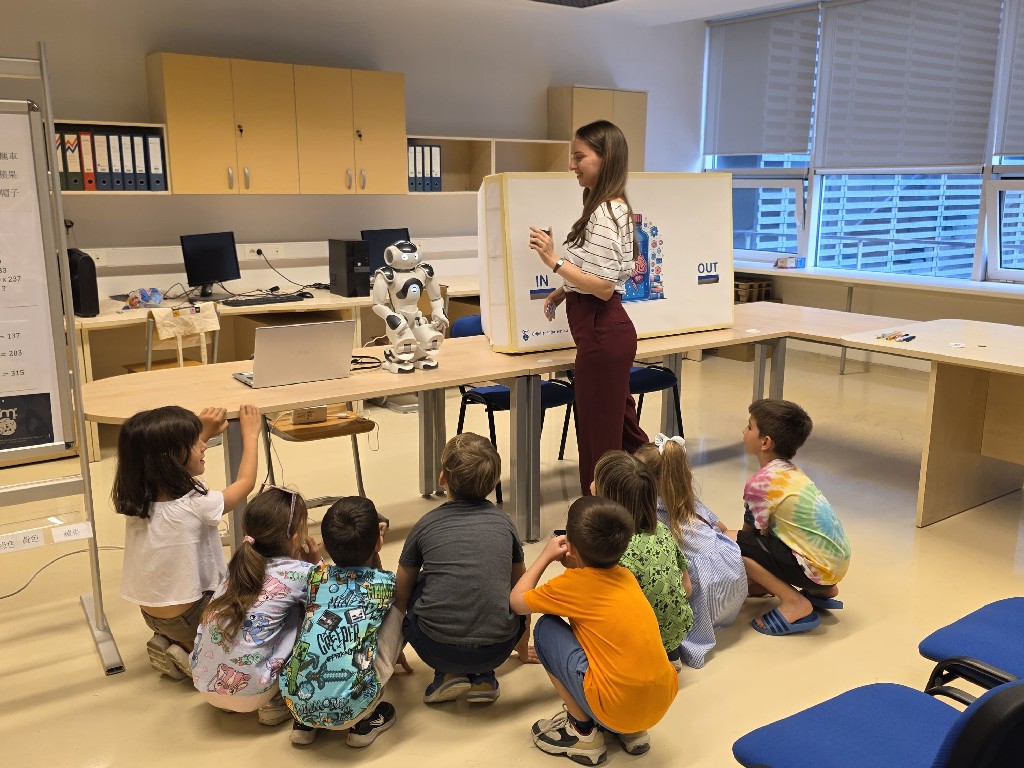
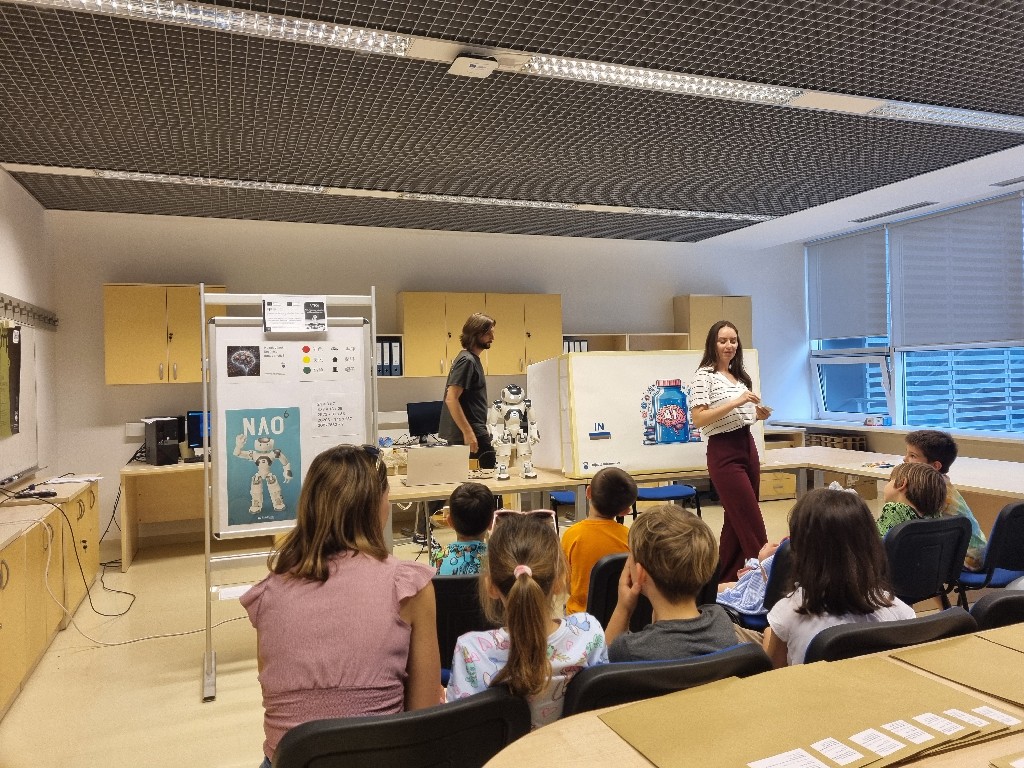
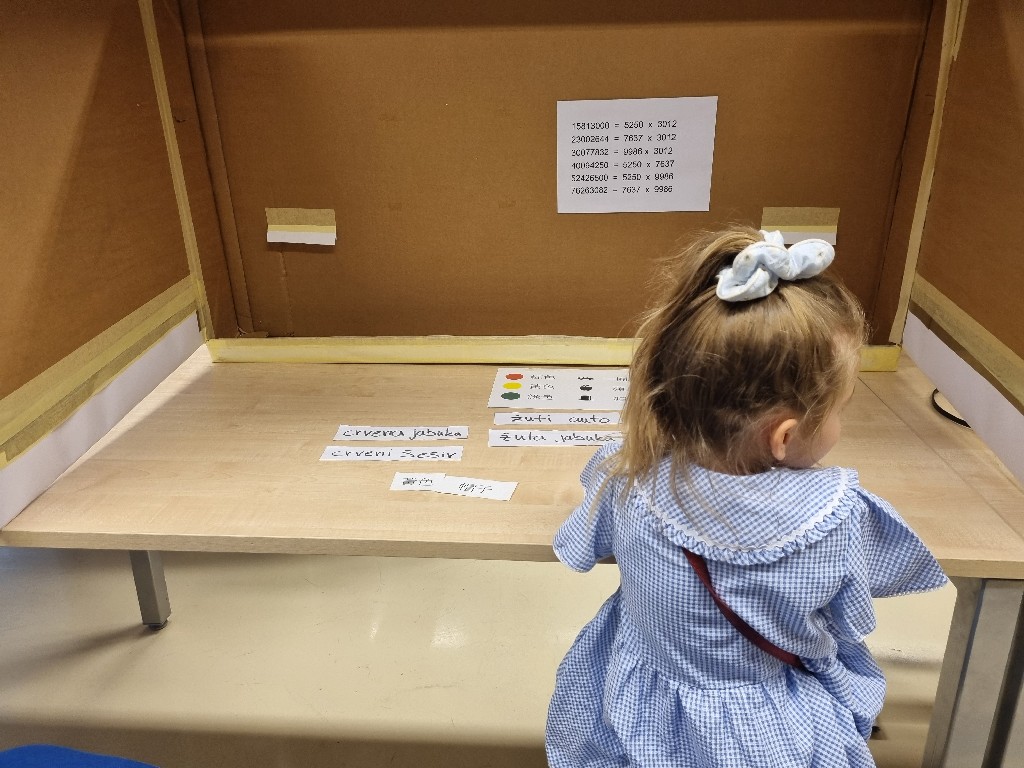
On this occasion, we held a workshop on artificial intelligence using the CS Unplugged approach and the Nao robot. The children were introduced to the basic ideas of artificial intelligence through the “Brain in the Jar” workshop, where they had the opportunity to “look inside the robot’s brain” and explore, in a simple and age-appropriate way, what artificial intelligence is and how it works.
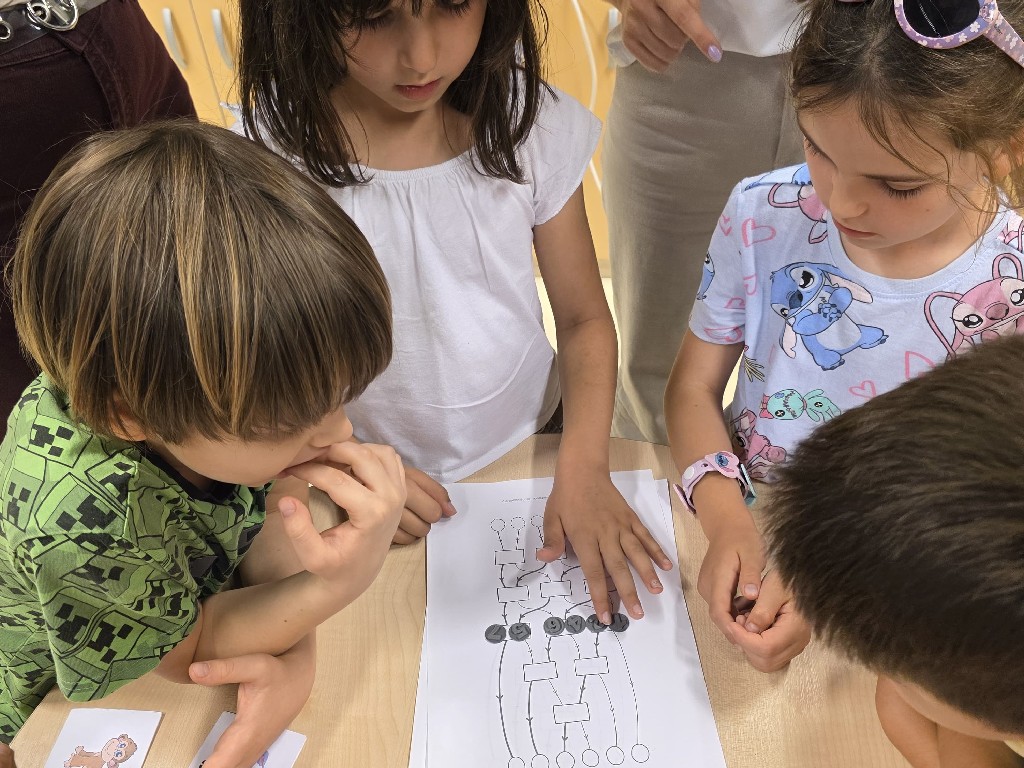
The workshop was led by our teachers Petra Crmarić, Dino Nejašmić, and Monika Mladenović. In addition, the children learned how a computer sorts numbers, with the help of our students Rebeka Alić, Leona Barišić, and Sandra Brakus.
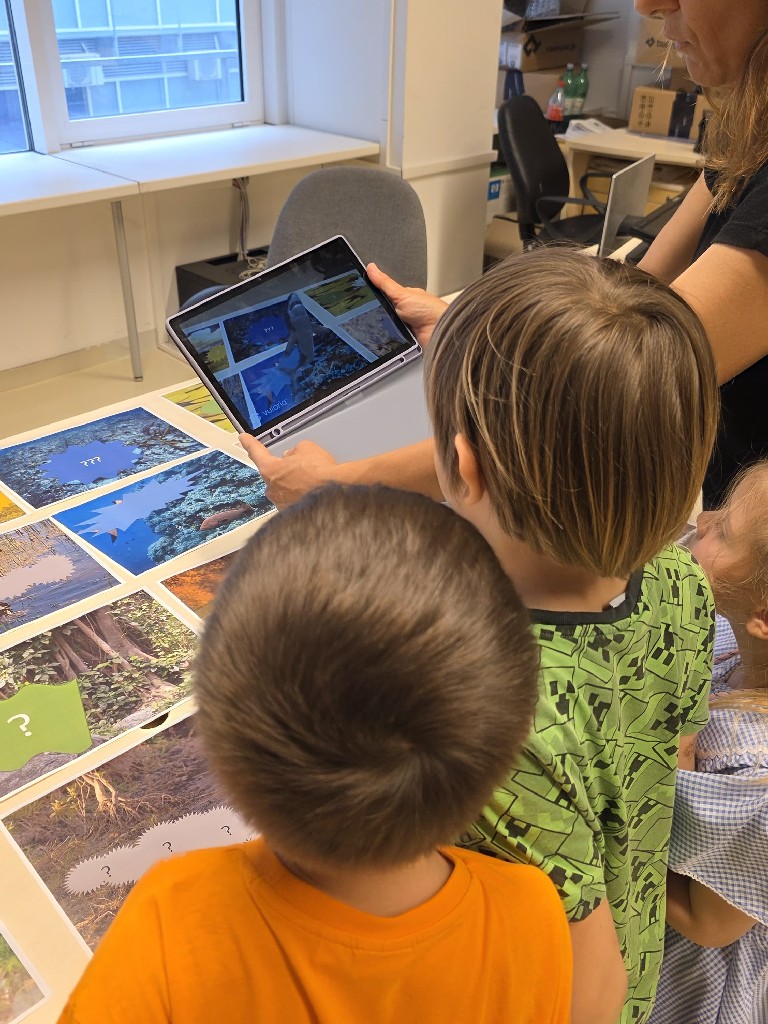
They also explored how computers represent images and created their own “computer” pictures. Using tablets, they discovered augmented reality by observing 3D animals that “came to life” on printed images.
The visit combined play, curiosity, critical thinking, and hands-on learning. Through age-appropriate activities, the children discussed the differences between human and artificial intelligence, learned that AI can also make mistakes, and discovered why human reasoning, common sense, and a critical attitude remain essential.
The children themselves described the visit in the most wonderful way:
“So, how was it for us at the Faculty of Science?
As always — extremely interesting and inspiring,
and we learned many new things.First, we solved a quiz
and learned how that famous AI works.
We talked about how our human intelligence
is different from artificial intelligence,
and how AI is not all-powerful either —
it can also make mistakes
when we ask it something.Sometimes, AI needs something
to be repeated several times,
while we use our intelligence,
common sense,
and critical thinking
to decide whether everything is clear
or perhaps a little unclear.Then we pretended
that we knew Chinese —
we remembered interesting Chinese symbols
and combined them into words
such as yellow hat, green apple,
and many others.We also played with a robot named Nao,
programmed an image by colouring zeros,
and enjoyed a very precise sorting game
that always knew
which number was bigger
and which was smaller.”
We are especially grateful for their curiosity, enthusiasm, and wonderful reflections after the visit. Encounters like this show how important it is to introduce children to informatics, computational thinking, and artificial intelligence from an early age — through play, dialogue, creativity, and exploration.
The workshop was held as part of the project “Artificial Intelligence for Future Technical Education and Industrial Competitiveness” (AITECH), IP-UNIST-48, funded by the European Union – NextGenerationEU under the National Recovery and Resilience Plan 2021–2026.

Tag :
Share This :
Funded by the European Union – NextGenerationEU.
The views and opinions expressed are solely those of the author and do not necessarily reflect the official position of the European Union or the European Commission. Neither the European Union nor the European Commission can be held responsible for them.
CALL TITLE: Call for Funding of Institutional Research Projects of the University of Split, under the National Recovery and Resilience Plan 2021–2026 (NRRP), and the Programme Agreement concluded between the University of Split and the Ministry of Science, Education and Youth.
PROJECT TITLE: Artificial Intelligence for Future Technical Education and Industrial Competitiveness
FUNDING DECISION: CLASS: 029-03/25-01/16, REG.NO.: 2181-202-3-01-6, issued on 20 October 2025.
TOTAL PROJECT VALUE: €222,203.10
BENEFICIARY: Faculty of Science, University of Split
PROJECT LEADER: Prof. Saša Mladenović, PhD